
Review with Photos, Video & Interview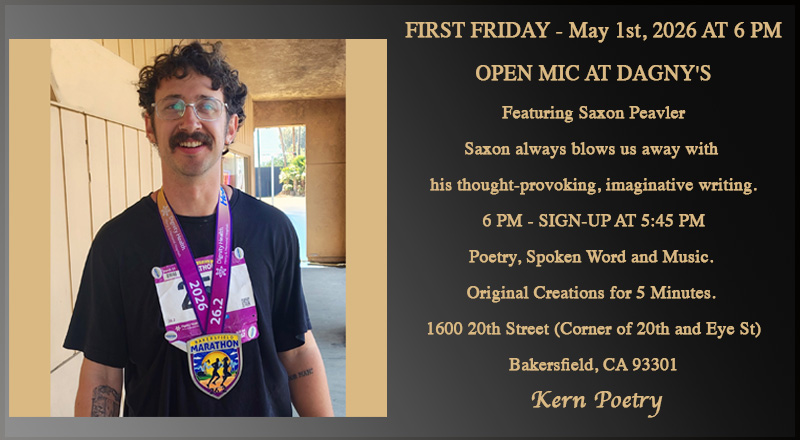
Video
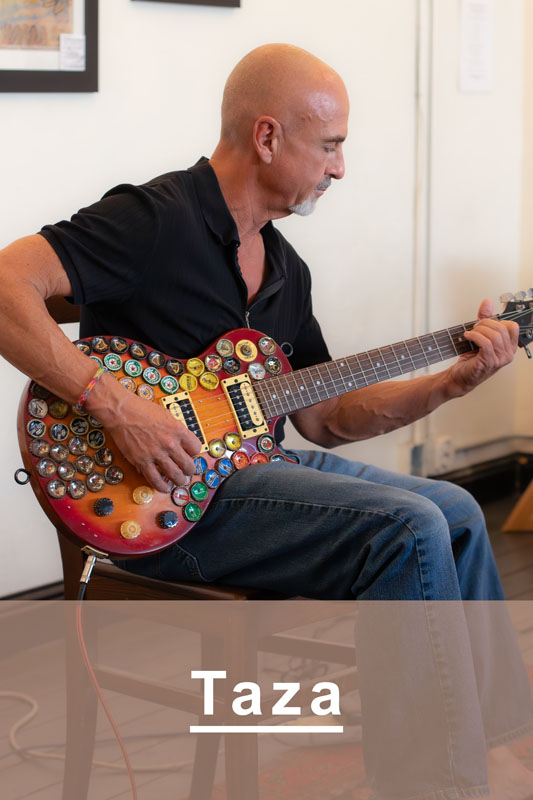
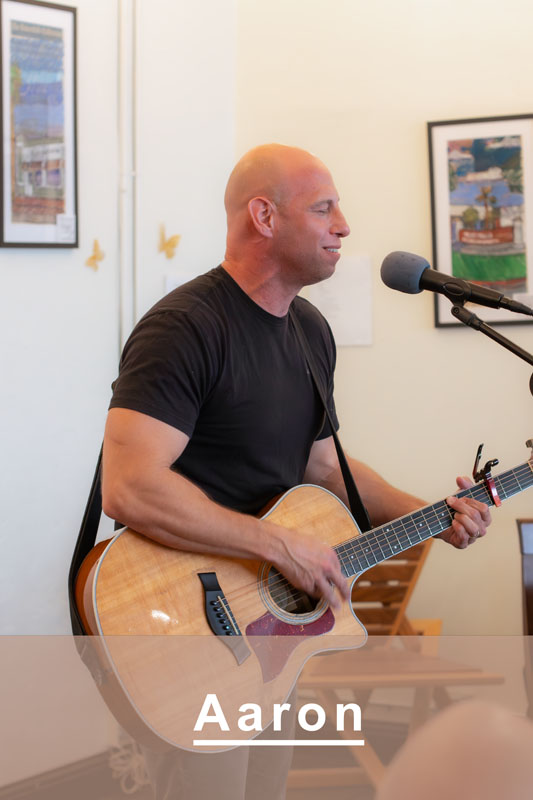
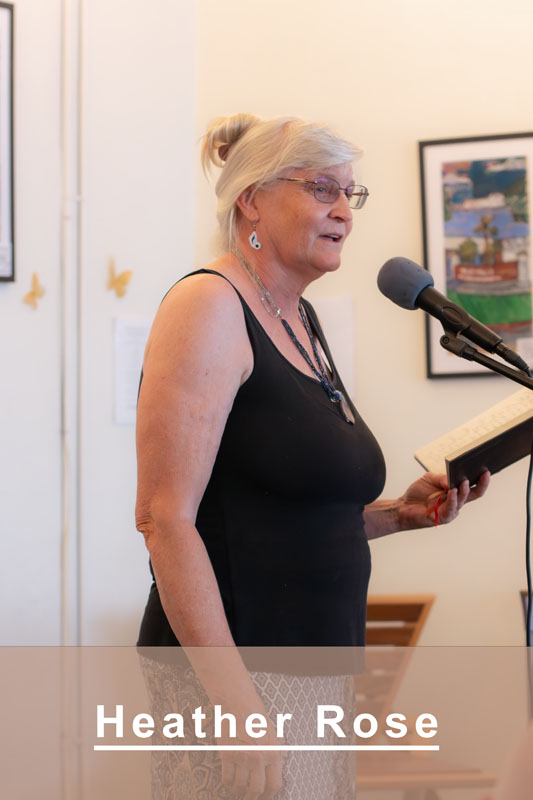
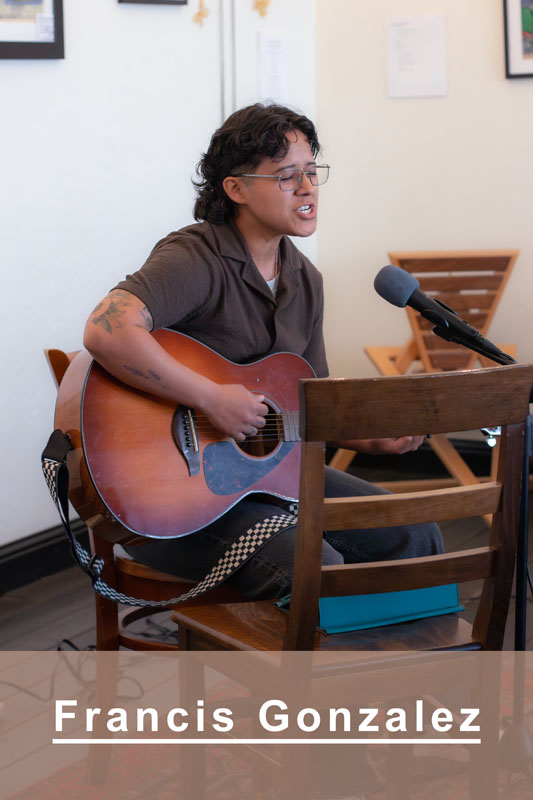
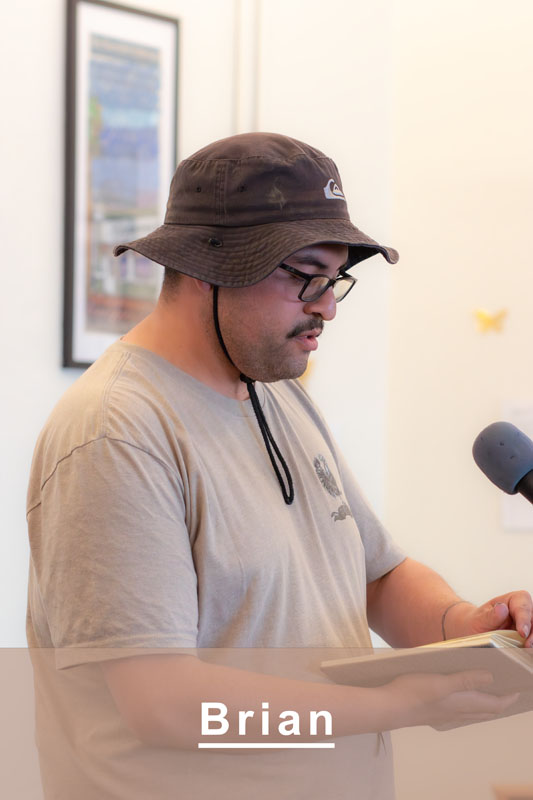
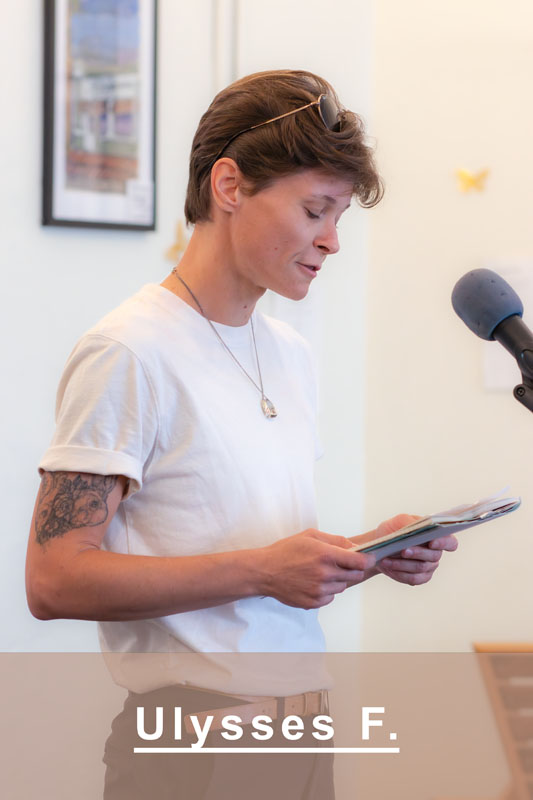
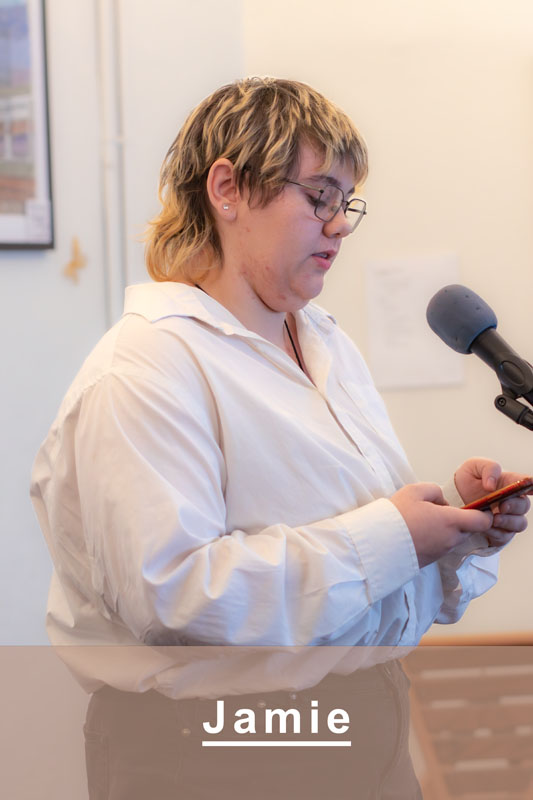
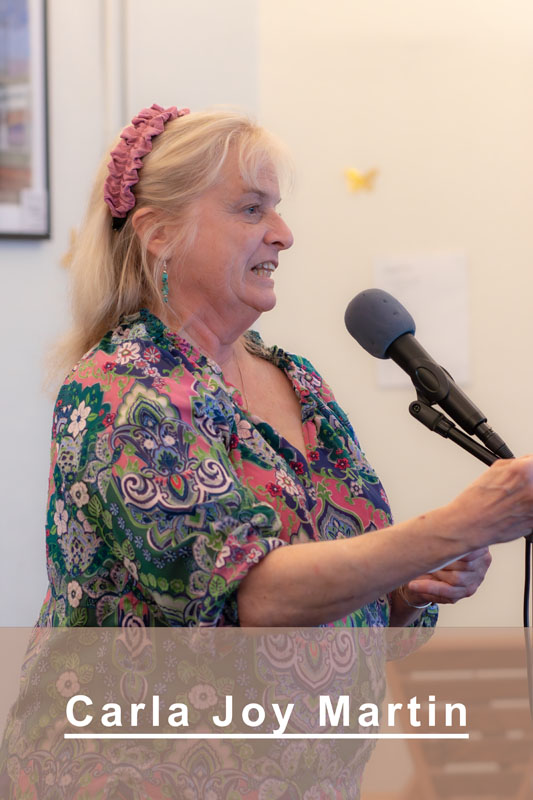
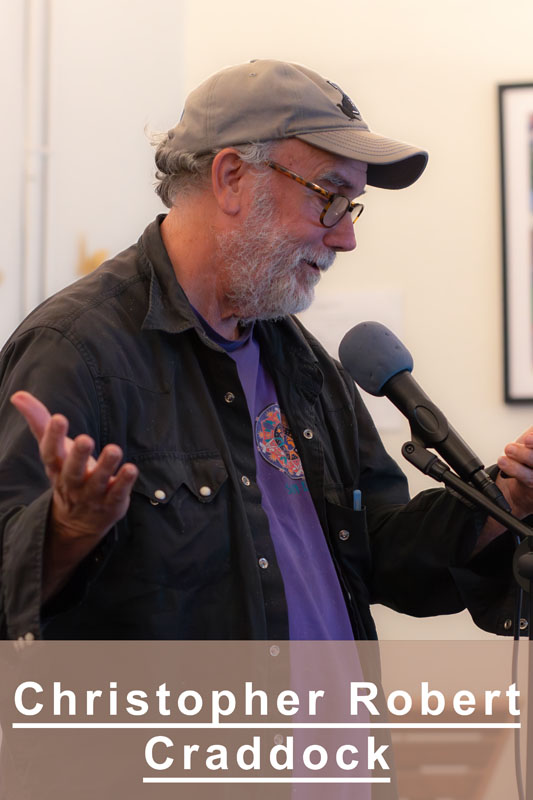
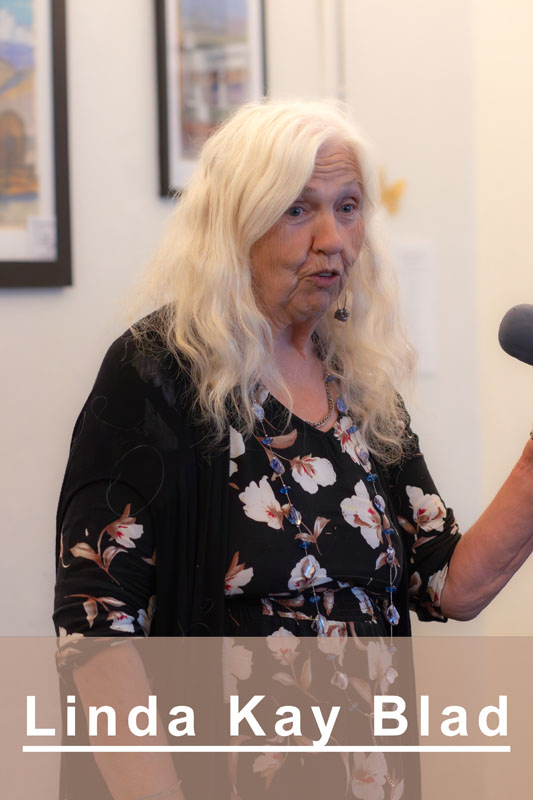
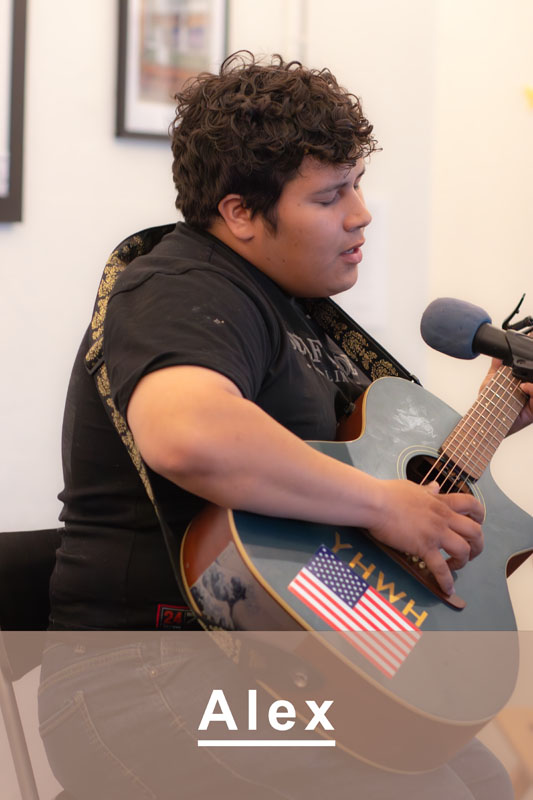
Participant Poets in the evening’s Open Mic were:
Video/Photos Review/Interview
FIRST FRIDAY – KERN POETRY OPEN MIC at DAGNY’S – MAY 1ST
Interview with Saxon Peavler — First Friday Open Mic at Dagny’s, May 1, 2026
By: Carla Joy Martin
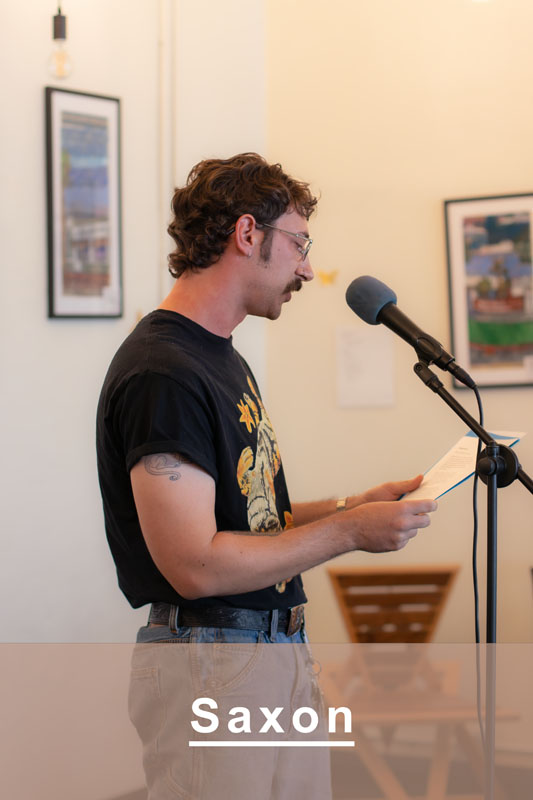
Dagny’s backroom was boisterous and bustling as local poets, artists and musicians gathered to share their latest works. Saxon Peavler was the featured poet, and he read several poems, including “Drought Ending Storm” and “Alabama Hills,” and “Dad’s Hands,” which are included below.
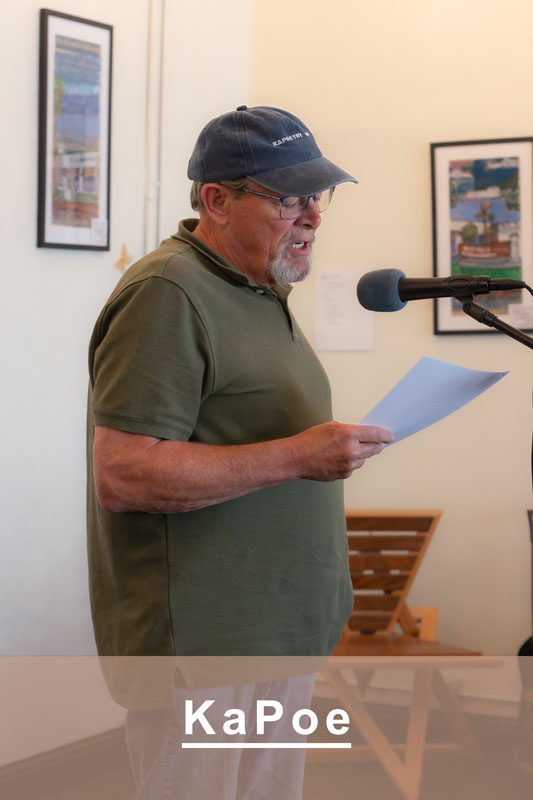
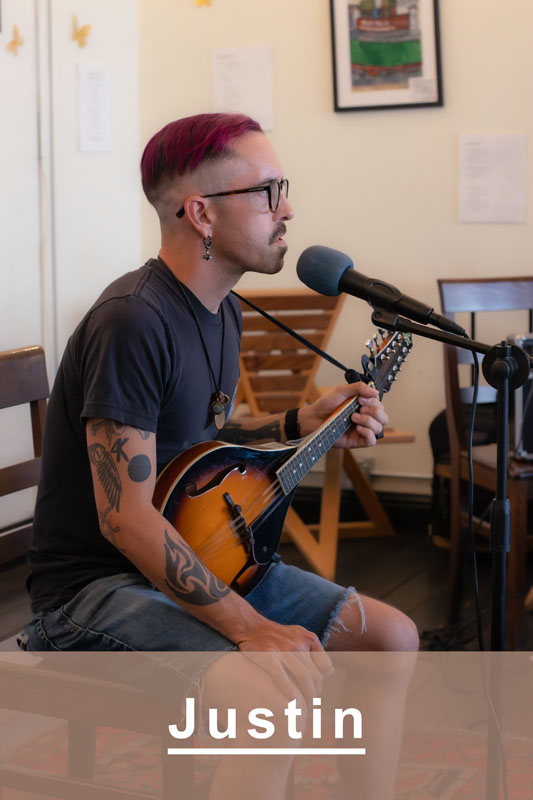
The Open Mic participants were Jamie Ludwig, Carla Joy Martin, Christopher Robert Craddock, Linda Kay Black, Alex Wit, Penny Sheppard, Andy, Kapoe, Justin, Taza, Aaron, Heather Rose, Francis Gonzalez, Brian, and Ulysses Fruguglietti.
Here are excerpts from Saxon’s poems, as well as his interview:
Excerpt from Drought Ending Storm
A father – working thirteen hour days in the blasted oil fields outside of town – apologizes to his
sons for his long absence, silently reminded of the ephemeral nature of childhood when he comes
home and finds the gigantic rain had dissolved his yard into mud. A pair of young lovers
remember the depths of their own failures and hold each other more tightly than ever, watching
out the window as gusts of wet air blow apart all the trees. Mothers tell their daughters, while
bringing in the dogs from the rain, that she never meant to make her feel so forgotten – and that
she can do anything she decides is worth it.
The droplets condense along the surface of some woman’s car windshield, the small crystal
structures project the whole history of her parents’ struggling across the dryest earth just to reach
this city and start again. She prays to God they’ve found peace and comfort now, hiding beyond
the opaque thunderclouds, watching her life unfold.
Two best friends forgive each other. The feral cats crawl under porches to stay dry, and no one
shoos them off. Everyone cries all at the same time, and the wringing out of the skyline gives
way to the clearest, opened heavens – slate-white and wonderful once again.
Excerpt from Alabama Hills
Your eyes seem so huge now, like an aperture
expanding, everything falling within. Sometimes I
look, and your eyes are larger than the landscape
itself; I see I am falling in again too.
The whole place is damp, and the wind cuts,
and my calves are sore and tight. And all
of it now, the desert and you and I, it all
feels so immediate, alive, and
precise. The color and shape is engraved
in awestruck detail, and the moment is
everything. We are laughing and climbing over each arch,
hewn out from forever, from now until back into the start.
Excerpt from Dad’s Hands
He pulls a shirt on, the calloused pads
on his finger tips snatch on loose threads.
We hold it together while we can.
The sun is burning up his skin. It’s
brown by the end of the season.
We are sculpted out of Earth’s attention.
He drives half an hour out of town
to the yard. It’s early; caffeine and two
cigarettes. When we really give, something is lost.
Q. What are the backstories to the poems you are willing to share with us? What events inspired them, or places, thoughts, art, music, etc?
A.` A lot of what I write circles similar themes and feelings, approached from different vantage points. I am obsessed with context, and the way forces external to ourselves shape and form us – the intuition that we are made out of the effects of our environment upon us can carry many different sorts of impressions, and whether that impression is uncanny and paranoid, or beautifully transcendent mostly depends on one’s perspective in the moment.
In the narrative poem I shared with y’all on the 1st, Drought Ending Storm, the whole community undergoes the same somewhat catastrophic experience together. I think anyone from a place has a gestalt sense of what it means and what it’s like to be from that place, and this ultimately is a kind of shared personality – containing shared histories, shared experiences, shared behaviors and responses. When it rains hard in Bakersfield, I feel it in my soul. Others I know say similar things. A close friend of mine and fellow Bakersfieldian, who has lived in the Bay Area for four or five years now, once told me, “No one else understands rain.”
I think that’s very funny, seeing as it hardly rains here, and we go through these insane droughts every few years. But I also think it’s true.
A single person seems to me to be a result of millions of cumulative and compounding effects all swirled up into one body and mind. In the poem I read about my father’s time working in the oil fields, Dad’s Hands, I wanted to explore how that dynamic is cyclic and, in a way, mutual. “We are sculpted out of Earth’s attention.” His hands are calloused, his skin is tanned, the toxic fumes in the environment nearly kill him, all of these encounters with the outside world shape him into who he is, and he in turns shapes his sons with his commitment to providing for and supporting them as they grow up, and most of all with his example and standard.
Q. Some of your poems, Saxon, capture the unique essence of our town. What are some of our local concerns, characteristics, and any crazy customs or rituals you have observed? You may be as broad or particular as you like. (ie. oil fields, agriculture, hot weather, or a typical Dagny’s customer, students at BC, friends, family?). You may quote from your poems, if you wish.
A. Describing the nature of a place has to be specific and exact, but hopefully evoke something that anyone can relate to or appreciate. Everything can happen to anyone, in a sense, and we all intuit that life is made of archetypes and patterns; only the mask laid over things changes, while what actually happens is essentially the same. Expressing this is sort of the point of stories/art in general. When I imagine and describe Bakersfield, I am fiercely protective of its uniqueness. But I hope that there is something here which is truly universal.
I feel that our home is not as devoid of inspiration as it seems. While there is not nearly the kind support for poetry and art here that other professions receive, our landscape and history is still extremely fertile for an artist. In the summertime, it gets so hot for so long that everyone loses their minds simultaneously. The Kern River is the oldest river in all of California, formed 80 million years ago; we keep a sign at the mouth of the river’s canyon with a tally of how many people have died in it. The number goes up every year.
Bakersfield is functionally segregated in a way that many other cities simply aren’t in 2026. The legacy of the darkest parts of United States history have ripple effects on things like economic class, drug addiction, chronic disability, and mental illness for people and families living here and now. Poetry and art often starts as a method for reclaiming one’s power and identity through self expression. I think creative writing will play a role in the process of places like Bakersfield “waking up” and finally making changes for the better of all its citizens. Self exploration, which includes the exploration of your context, gives you permission to then begin choosing yourself for yourself. We are not necessarily passive participants in life, and can make choices about who we want to be – both as individuals and communities.
There’s a lot of things to write about and to observe and engage with when it comes to our home town, and it matters that we do so.
Q. You represent our growing local community of young poets (20-30 years old)—what events or opportunities have you found for young people in Bakersfield that are enhancing your creative work? Any Open Mics, concerts, teachers, gurus? Any particular poets or authors, musicians or artists that are helpful to you? Any famous folks? Any precious but not-as-well-known sources of inspiration? Conversely, what makes it difficult to be a creative youth in this town? Give us your unique perspective.
A. I think anyone who feels the pull to be creative should find other people who feel the same way, and encourage each other to always grow and explore and push to get better at saying what you want to say. There are lots of communities where people can show up and share their art. Blastbones Zine hosts an open mic, the Annex has an open mic, and of course Kern Poetry. Gathering the courage to share is a powerful act of self love, and I commend all the people working in Bakersfield to open up that channel for people.
I only learned very recently, last year, that a Bakersfieldian has won the Pulitzer Prize for poetry. Frank Bidart came from a family of farmers and ranchers, growing up in the fifties and sixties as a closeted gay man, before he left for the East Coast and pursued a career as a writer and academic. His work is profound, disturbing, beautiful, specific, universal, all the good stuff. Some of his poems deal with Bakersfield and Kern County head on, and I really recommend reading those to anyone who also lives here and has experienced the highs and lows of our hometown. The ones that come to mind are California Plush and Book of Life.
KERN POETRY
–
POETRY LIVES!
Open Mic hosts were:
Carla Joy Martin
Portia Choi
Photographer, Videographer and Video Editor:
Juan Rico
Stay tuned to our Kern Poetry Home Page for the next Open Mic and Poetry Events!
